Derek Gregory, University of British Columbia: “Gabriel's War: Cartography and the Changing Art of War"
January 25, 2pm
Lexmark Room, Main Building
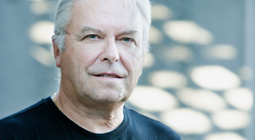 Dr. Derek Gregory is a member of the Department of Geography and one of two Peter Wall Distinguished Professors at the Peter Wall Institute for Advanced Studies at the University of British Columbia in Vancouver, Canada. Dr. Gregory trained as an historical geographer at the University of Cambridge. His research focused on the historical geography of industrialization and on the relations between social theory and human geography and explored a range of critical theories that showed how place, space, and landscape have been involved in the operation and outcome of social processes. His 1982 book, Regional Transformation and Industrial Revolution, was staged on the classic ground of E.P. Thompson’s Making of the English Working Class. Following a move to Vancouver in 1989, Gregory’s work was reinforced by postcolonial critique, outlined in his 1989 book Geographical Imaginations. This new phase of work owed much to Edward Said’s critique of Orientalism, but it was much more concerned with the corporeality and physicality of travel – with embodied subjects moving through material landscapes – and with the constantly changing (often mislaid) cultural baggage of the travelers. And it paid attention what travelers mapped, sketched, and photographed – and to the consequences these representations had for their encounters.
This work on travel and travel writing was interrupted by the terrorist attacks on the World Trade Center and the Pentagon on 11 September 2001, and the focus of his research shifted to the present. Drawing on his training as an historical geographer and his sense of the renewed power of Orientalism, Dr. Gregory traced the long history of British and American involvements in the “Middle East,” and showed how these affected the cultural, political, and military responses to 9/11. The Colonial Present: Afghanistan, Palestine, Iraq (2004) showed how war quite literally takes place, and described in detail the violent ‘taking of places’ not only in Afghanistan and Iraq but in occupied Palestine. The study showed how the conduct of war connects the abstractions of geopolitics – the pronouncements of politicians, the strategies of generals – to the lives and deaths of countless ordinary men and women.
His forthcoming book, The Everywhere War, shows how the conduct of war is shaped by the spaces through which it is conducted; ranging from the global war prison at Guantanamo Bay through counterinsurgency in Baghdad and the drone wars in Afghanistan/Pakistan. His new research project, Killing space, is a critical study of the techno-cultural and political dimensions of air war. It focuses on three major campaigns: the combined bombing offensive against Germany in the Second World War, America’s air wars over Indochina, and the present use of UAVs in Afghanistan/Pakistan, Somalia, Yemen, and elsewhere. It pays particular attention to the changing ways in which cities (and eventually people) have been visualized as targets within what is now called the ‘kill-chain,’ and to the different ways in which the media have represented and reported bombing to different publics.
